Cleaning franchise training should help you learn the service, equipment and business tasks you will actually perform. Before buying, check what is included, how competence is assessed and who supports you after launch. Use the day-one-to-month-six checklist below to verify the proposed programme rather than assume every franchise delivers the same training.
Someone considering a cleaning business without industry experience needs more than a reassuring headline. You need enough detail to judge the learning commitment, your starting skills, the work you may undertake and the help available when a job does not go to plan.
This guide explains questions to take to AustClean. The timeline is a buyer’s verification framework, not a confirmed AustClean training schedule. Obtain the current programme and written commitments for your proposed franchise before making plans around dates, costs or support.
What does “no experience needed” actually mean?
Check the current entry requirements directly. An invitation to enquire without a cleaning background does not establish that every applicant, service or business arrangement is suitable. Ask whether the proposed work requires prior skills, licences, site inductions or specialist qualifications, and how those requirements are met.
Previous work can still be useful. Administration experience may help with schedules, records, invoices and customer messages. Sales or hospitality work may help with enquiries and handling complaints. Trades or logistics experience can help with equipment care, travel planning and recognising when a task needs specialist assistance.
Those strengths do not replace training in the actual service. Equally, attending a course does not remove responsibility for daily decisions. You still need to turn up reliably, follow appropriate procedures, maintain records and know when to stop work and ask for help.
What should you verify before the first training day?
Ask for a written outline showing the content, delivery format, trainer, location, expected duration and practical exercises. Request an explanation of what happens if you need more practice. A list of topics is less useful than knowing what you will be expected to do safely and consistently at the end.
Use the AustClean Information Pack to start the conversation, then check the proposed agreement and supporting schedules. The franchise FAQs can help identify further questions. Neither replaces the detailed documents you and your advisers need to review.
Which practical services are covered, and which are outside the training’s scope?
What business systems will you practise using before customers rely on them?
Who must attend if two people intend to own or operate the business?
Are training, assessment, travel, accommodation and additional sessions included or separately charged?
Who decides readiness, and what records show the skills demonstrated?
Can you review the relevant operating and safety procedures before committing?
The ACCC’s before-you-sign guidance recommends getting written answers and independent advice from people experienced in franchising. It also encourages checking the experience of current and former franchisees. Ask those operators how the support they received compared with what they expected.
How can you check support from day one to month six?
The stages below organise your questions. They do not promise that training happens on these dates, that a franchise provides monthly coaching, or that a person is ready to work independently after a fixed period. Replace each stage with the franchisor’s verified schedule and identify any gaps.
| Planning stage | What to verify | Evidence to request |
|---|---|---|
| Before starting | Entry requirements, service scope, learning plan and costs | Current programme, fee schedule and agreement references |
| Day one and induction | Orientation, support contacts, procedures and safety foundations | Materials, contact process and practical learning objectives |
| Before independent jobs | Equipment use, service methods, supervised practice and readiness | Task checklist, feedback and assessment method |
| First operating month | Quoting, scheduling, invoicing, customer contact and quality checks | Worked practice tasks and the agreed support process |
| Months two to three | How problems, complaints and further learning needs are reviewed | Written support commitments and additional-session costs |
| Months four to six | Refresher options, changed services and business-skills development | Available resources, eligibility and arrangements for review |
Day one: can you explain how the operation works?
Orientation should leave you clear about the proposed service scope, customer commitments, operating procedures and whom to contact. Ask how updates to manuals and systems reach operators. Check which instructions are mandatory and how uncertainty is resolved before a customer job begins.
Discuss the real work pattern. Cleaning, travel, quoting, customer messages, stock management and administration all take time. If you are considering part-time operation, confirm whether it is permitted and whether the required training and support sessions fit your availability.
Before independent work: can you demonstrate the practical tasks?
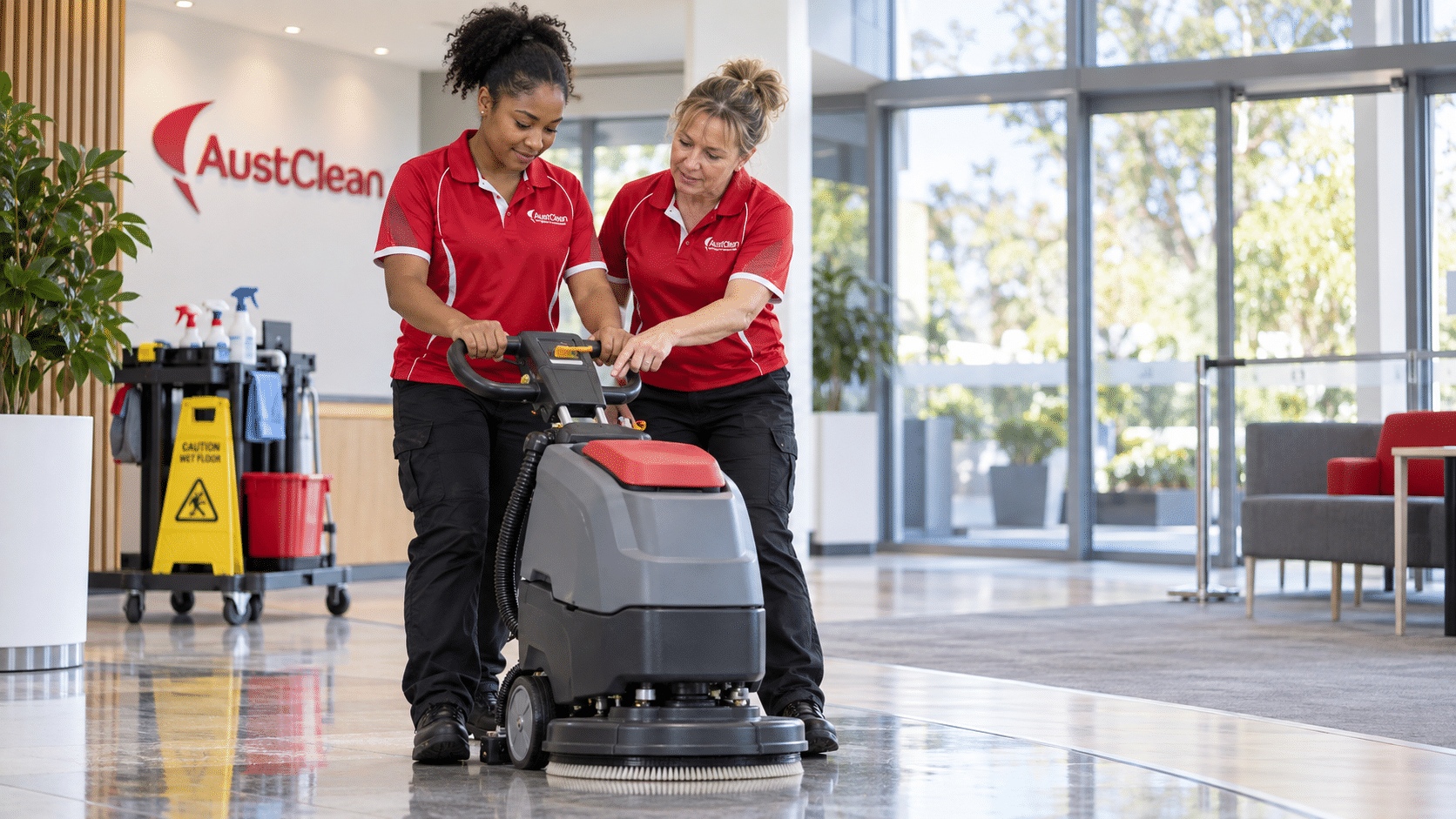
Ask for hands-on instruction on the equipment and products you will use. Topics to discuss include selecting an appropriate method for a surface, preparing the work area, using equipment as directed, checking the result, cleaning the equipment and reporting faults. Find out which tasks require supervision until you are assessed as ready.
Supervised practice should relate to the agreed service range. Do not assume general cleaning instruction qualifies you for every commercial environment or specialist task. Customer sites may have separate access, security, induction or competency requirements.
Clarify who supplies practice equipment, what happens if a machine fails and how replacement or refresher training is arranged. An equipment count alone says little about readiness or value. Check the actual inclusion schedule and the suitability of each item for the work.
The first operating month: can you run the job from enquiry to payment?
Ask to practise the whole administrative sequence: receiving an enquiry, clarifying the customer’s requirements, assessing the site, preparing a quote, confirming the scope, booking work, recording completion, issuing an invoice and following up payment. Each hand-off should be clear enough to repeat without relying on memory.
Quoting practice should include service time, travel, supplies, administration and the applicable charges. Ask how scope changes and additional work are agreed with customers. A busy diary is not enough if the quote omits time or costs needed to deliver the service.
Make room for quality checks. A strong cleaning result may not retain a client if messages go unanswered or visits are missed. Ask how checklists, customer feedback, missed appointments, rework and complaints are recorded and reviewed.
Months two to six: what happens when you need more help?
Request the actual support process, rather than interpreting “ongoing support” as unlimited assistance. Who responds, through which channel, during what hours and at what cost? What help is available on site, and what is remote? If a response target is offered, ask for it in writing.
Discuss how further training is triggered. You may need help with an unfamiliar product, a difficult customer issue, a system change or a service you have not previously provided. Find out who approves additional services and what instruction is required before you offer them.
For business coaching, ask what is reviewed and what remains your responsibility. Useful questions cover quoting accuracy, overdue invoices, travel, customer retention, stock usage and workload. Do not assume coaching creates customers, guarantees profit or replaces independent accounting advice.
Which safety and business skills should the programme address?
Safety questions belong alongside cleaning technique. Ask about chemical identification, storage, transport, labelling, appropriate protective equipment, spills and emergency procedures. Confirm where current safety information is kept and how everyone doing the work can access it.
Safe Work Australia’s safety data sheet guidance explains the role of SDS information for hazardous chemicals. Use it to ask how training covers hazards, handling and emergency information for the products actually used. Obtain applicable state or territory regulator advice for detailed obligations.
Also ask about manual handling, slips and trips, electrical equipment, working alone, incident reporting and customer-site requirements. This is a discussion checklist, not a complete safety procedure. A task outside your training or equipment’s intended use needs assessment before work proceeds.
Business learning should cover records, customer communication, scheduling, invoicing and cash-flow awareness. Tax, employment, insurance and legal obligations need qualified advice tailored to your structure and activities. Ask where the franchise’s training ends and external professional assistance becomes necessary.
How do you compare training offers fairly?
Keep an evidence record with a row for each promised activity. Record what was said, where it appears in the documents, who provides it, what it costs and what remains unanswered. “Included” is incomplete if you do not know whether travel, time away from other work or repeat sessions are extra.
Compare practical access and feedback, not just the number of days advertised. Ask how the programme accommodates different starting skills and how gaps are addressed. A longer course is not automatically better, and a shorter one does not establish that you can safely deliver every service.
Review the broader franchise cost questions alongside training. A low entry price does not establish the full set-up budget or the cash needed while you learn and build the operation. Keep training costs and household funding needs visible in your planning.
What questions do first-time applicants often ask?
Can I enquire if I have never cleaned professionally?
Ask AustClean to confirm its current entry criteria and the requirements for the proposed service range. Your background, ability to learn, availability and practical capabilities need to be considered. Do not treat a general no-experience message as automatic acceptance or proof of readiness.
How long does cleaning franchise training take?
Obtain the current schedule for the franchise you are considering. Separate initial instruction, supervised practice, any assessment and later support. This article’s day-one-to-month-six framework helps organise questions; it does not establish a fixed AustClean training duration.
Does training include equipment and chemical safety?
Request the detailed syllabus and the list of equipment and products covered. Ask how safe use is demonstrated, where SDS information is available and how competence is checked. Verify any additional site or specialist-service requirements before accepting work.
Who pays for travel and extra training?
Check the agreement and current fee schedule. Ask about travel, accommodation, replacement attendees, further practice and refresher sessions separately. Avoid assuming that a training fee includes every associated cost.
Will ongoing support guarantee customers or income?
No training or support description establishes future customer numbers or financial results. Ask what support is contractually provided, then assess customer acquisition, delivery costs and cash needs separately with your advisers.
What should I do before committing?
Collect the current programme and franchise documents, get written answers to unresolved questions, speak with current and former operators and obtain independent advice. If you are researching a particular location, use the state guides for context and confirm the proposed operating area directly.
What is the next step?
A useful training plan connects practical work, customer service, business administration and a clear support process. Check what is actually promised, how learning is assessed and what you need to fund. To learn more, request the AustClean Information Pack and take this checklist to your discussion.